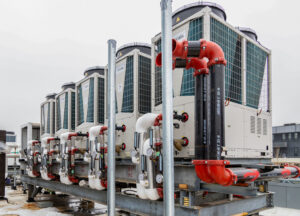
The Necessity of Proper Airflow Monitoring Technology

Maintaining precise, reliable airflow monitoring is one of the most important responsibilities in modern commercial HVAC system design. Whether it’s a hospital isolation room, a research lab, a data center, or a high-rise office tower, accurate airflow is essential for delivering safe ventilation, stable pressurization, and consistent comfort. But airflow isn’t just about comfort or compliance — it directly affects energy performance, system longevity, and indoor air quality across an entire building.

As mechanical systems become more complex and energy standards more demanding, engineers and facility teams need real-time insight into how air is actually moving through ducts and critical spaces. That insight begins with high-accuracy airflow measurement, supported by reliable sensing technologies, validated data, and continuous monitoring. When airflow is not measured correctly, even well-designed systems drift out of balance, leading to wasted energy, unstable temperatures, and potential compliance failures.

Airflow Monitoring and Why It Matters in Commercial HVAC

Effective airflow monitoring enables HVAC systems to perform the way they were engineered to operate. At the most fundamental level, airflow determines how much conditioned air flow reaches each zone, how well a system maintains space pressurization, and whether ventilation meets minimum compliance requirements such as ASHRAE ventilation standards. Without accurate monitoring, the system is essentially operating blind — unable to validate that the designed volumes of air are actually being delivered.

Modern facilities depend on airflow monitoring because:

  • Airflow influences temperature, comfort, and ventilation effectiveness
  • Misadjusted dampers, clogged filters, or failing fans can quietly reduce velocity and airflow delivery
  • System imbalances often go unnoticed until they create visible issues
  • High-accuracy airflow data allows engineers to adjust and control systems proactively
  • Proper measurement helps prevent excessive outdoor air intake, reducing unnecessary energy load

In many commercial buildings, airflow changes gradually over time due to equipment wear, unaddressed maintenance needs, or shifting building usage. Continuous monitoring ensures these changes don’t accumulate into major performance problems. When airflow readings are reliable, facility teams can take corrective action early — long before comfort complaints, IAQ issues, or energy spikes occur.

Airflow Measurement — How Sensors Capture Accurate HVAC Data

Accurate airflow measurement is the foundation of every effective monitoring strategy. In any commercial HVAC system, the airflow delivered to a space depends on multiple variables — fan performance, duct design, damper position, filter loading, and real-time building conditions. Without precise measurement tools, these variables can shift unnoticed, causing airflow to drift away from design intent.

Airflow is typically measured in one of two ways:
(1) by directly sensing air velocity, or
(2) by estimating flow based on pressure differentials.

High-accuracy solutions combine both techniques to ensure stability across a wide range of operating conditions.

How Modern Airflow Sensors Work

Most airflow monitoring stations rely on multi-point sensing arrays placed across a duct cross-section. Each sensor probe collects data that contributes to an averaged measurement representing actual delivered air flow. This approach compensates for uneven velocity profiles, duct turbulence, and real-world installation challenges.

Common components include:

  • Velocity probes that measure air speed at multiple points
  • Temperature sensors enabling thermal-based airflow analysis
  • Static pressure taps that help validate system performance
  • Electronics modules that process readings into digital outputs

The goal is simple: provide facility teams with high-accuracy airflow data that reflects how the system is performing under real operating loads.

Why Accuracy Matters

Precise airflow measurement is critical because even small errors can create large downstream issues:

  • Undetected reductions in velocity can starve zones of required ventilation
  • Excessive airflow increases fan energy consumption
  • Poor airflow information leads to incorrect system control adjustments
  • IAQ and code-related ventilation requirements may not be met
  • System imbalances can cause long-term performance degradation

When airflow data is reliable, engineers can quickly identify emerging issues, adjust equipment, and maintain system balance — improving both occupant comfort and operational reliability.

Thermal Dispersion Airflow Technology Explained

Thermal dispersion airflow sensing is one of the most accurate and stable methods for measuring airflow in commercial HVAC systems. Unlike pressure-based devices that infer airflow from differential readings, thermal dispersion technology uses heat transfer principles to directly evaluate how much air is moving across a sensor probe. This method offers exceptional sensitivity at both low and high velocities, making it ideal for complex and mission-critical environments.

How Thermal Dispersion Sensors Work

A thermal dispersion sensor uses two temperature-sensitive elements:

  1. A heated sensor that introduces a controlled amount of thermal energy
  2. A reference sensor that measures ambient temperature

As air moves across the probe, it cools the heated element at a rate proportional to the velocity of the airflow. The sensor’s electronics convert this cooling effect into a real-time, high-accuracy airflow reading.

Key advantages include:

  • High accuracy at low, medium, and high velocities
  • Minimal pressure drop, maintaining system efficiency
  • Stable performance despite humidity or debris
  • Ability to detect nuanced changes in air flow
  • Strong reliability for long-term monitoring

Air Flow Control in Critical Facilities (Hospitals, Labs, Data Centers)

In specialized environments, controlling air flow isn’t just about comfort — it’s central to safety, system stability, and regulatory compliance. Facilities such as hospitals, laboratories, and data centers rely on precise airflow management to maintain pressurization, protect sensitive equipment, and ensure that ventilation performs exactly as designed.

Healthcare: Protecting Patients and Staff

Hospitals depend on highly controlled air movement to:

  • Maintain positive pressure in protective environments
  • Maintain negative pressure in isolation and infectious control rooms
  • Regulate temperature and airflow for operating rooms
  • Ensure that fresh outdoor air is delivered according to ASHRAE 170 requirements

When airflow cannot be accurately measured, the entire ventilation strategy becomes vulnerable — compromising safety and potential compliance with health standards.

Laboratories and Cleanrooms: Precision is Non-Negotiable

Labs and cleanrooms demand precise directional airflow to:

  • Prevent cross-contamination
  • Protect experiments and equipment
  • Maintain sterile or particle-controlled environments
  • Control airborne hazards or chemical exposure

Thermal dispersion sensors, high-accuracy probes, and continuous monitoring help ensure the airflow values required are consistently achieved without drift.

Data Centers: Managing Heat Loads Reliably

For data centers, stable airflow keeps equipment cool and prevents downtime. Effective airflow management allows:

  • Hot aisle/cold aisle balancing
  • Cooling optimization based on fluctuating server loads
  • Precise airflow delivery to racks and equipment zones
  • Avoidance of hotspots and energy waste

Without dependable airflow visibility, operators risk unstable cooling performance, higher energy costs, and potential damage to heat-sensitive infrastructure.

Monitor Airflow Metrics in Real Time Through BAS Integration

Modern commercial buildings rely on building automation systems (BAS) to maintain comfort, energy efficiency, and operational reliability. When airflow monitoring stations are integrated directly into the BAS, facility teams gain the ability to monitor airflow metrics continuously — viewing real-time trends, diagnosing issues early, and making informed decisions based on actual system performance rather than assumptions.

How BAS Integration Enhances Airflow Monitoring

A BAS-connected airflow station provides a constant stream of data, including:

  • Air velocity and volume
  • Temperature and humidity that influence airflow behavior
  • Damper and fan performance
  • Variations in zone airflow over time
  • Alerts when airflow readings drift outside acceptable thresholds

This level of insight allows operators to detect imbalances, adjust control sequences, and identify maintenance needs before they escalate into costly problems.

Benefits of Real-Time Airflow Data

Integrating airflow data into a BAS creates several clear advantages:

  • Early detection of airflow deviations due to filter loading or equipment wear
  • Improved system control, ensuring that airflow delivery matches design intent
  • Smarter ventilation strategies that support compliance and IAQ goals
  • Reduction in energy waste caused by excessive ventilation rates
  • Greater performance visibility for complex or multi-zone systems

Real-time monitoring also allows airflow trends to be analyzed historically, helping teams understand how the building responds to occupancy changes, outdoor conditions, or shifting system loads.

Supporting Multi-System Coordination

Because airflow affects temperature, pressurization, ventilation, and overall HVAC performance, BAS integration ensures that airflow data is not isolated — it synchronizes with:

  • Heating and cooling sequences
  • Fan curves and motor speed adjustments
  • Damper modulation
  • VAV and CAV system logic
  • IAQ and ventilation verification

Airflow Monitoring Stations — Components, Placement, and Applications

An airflow monitoring station is the core device responsible for capturing reliable airflow data within a commercial HVAC system. These stations combine sensing technology, electronics, and communication interfaces that allow facility teams to view accurate, real-time airflow information — a critical requirement for maintaining safety, balancing systems, and optimizing energy performance.

Core Components of an Airflow Monitoring Station

While designs vary by manufacturer, most stations include the following elements:

  • Sensor probes that measure air velocity or thermal energy dissipation
  • Temperature elements that support thermal dispersion airflow calculations
  • Electronics modules that translate raw signals into calibrated airflow values
  • Mounting hardware that positions sensors across the duct’s cross-section
  • Output connections for BAS integration and system control

These stations are engineered to deliver high accuracy, even in ducts with turbulence or non-uniform velocity profiles.

Where Airflow Monitoring Stations Are Installed

Placement plays a major role in the quality of airflow measurement. Stations are typically installed:

  • In supply, return, or outdoor air ducts
  • Upstream or downstream of air handlers and fan arrays
  • At key system junctions where airflow balancing is critical
  • At outdoor air intakes to ensure ventilation compliance with ASHRAE 62.1
  • In sensitive environments such as labs, cleanrooms, and health facilities

Stations may also be installed at multiple locations to capture airflow at various points in the system, especially in buildings with complex ventilation strategies.

Real-World Problems Caused by Improper Airflow Monitoring

When airflow monitoring is inaccurate, incomplete, or nonexistent, commercial HVAC systems lose their ability to maintain balanced, predictable performance. These failures rarely appear all at once; they accumulate slowly, eventually causing comfort issues, IAQ concerns, and substantial energy waste. In mission-critical facilities, poor airflow visibility can even compromise safety and regulatory compliance.

1. System Imbalance and Unstable Pressurization

Without reliable airflow data, supply and return volumes drift apart. This can lead to:

  • Negative pressure in areas intended to be neutral or positive
  • Excessive infiltration of unconditioned outdoor air
  • Loss of control in labs, ORs, cleanrooms, and isolation spaces

Imbalances disrupt building envelope performance, increase heating and cooling loads, and create inconsistent environmental conditions.

2. Increased Energy Consumption

Airflow inaccuracies often show up as higher-than-expected energy bills. Common causes include:

  • Oversupplying outdoor air due to incorrect airflow assumptions
  • Fans operating at higher speeds than necessary
  • Dampers modulating incorrectly because of inaccurate airflow feedback
  • Excessive ventilation rates overwhelming downstream conditioning equipment

Even minor deviations in delivered airflow can create major increases in system load and energy cost.

3. Poor Indoor Air Quality (IAQ)

Improper airflow monitoring can directly undermine IAQ objectives:

  • Insufficient outdoor air intake reduces ventilation effectiveness
  • Stagnant areas may develop where airflow is not reaching design targets
  • Contaminants may accumulate without proper dilution
  • Directional airflow requirements may not be met in sensitive spaces

In healthcare and laboratory environments, these failures can quickly become critical.

4. Masked Equipment Problems

Because airflow issues develop gradually, poor visibility makes it difficult to detect:

  • Fan degradation
  • Clogged filters
  • Blocked ducts
  • Damper malfunctions
  • Dirty coils
  • Changes in system infrastructure behavior

With proper monitoring, these problems are detected early, before they evolve into costly repairs or downtime.

Choosing the Right Airflow Monitoring Solution for Your Building

Every building has different ventilation demands, operational priorities, and regulatory pressures. Selecting the right airflow monitoring solution requires evaluating your system’s design, the criticality of each zone, and how precisely you need to measure airflow across various operating conditions. A one-size-fits-all approach rarely works; instead, the best monitoring systems are tailored to the building’s unique needs.

Key Considerations When Selecting an Airflow Monitoring System

To ensure long-term reliability and high accuracy, engineers and facility managers should evaluate:

  • Application type
    Hospitals, labs, and data centers may require more precise sensing than office spaces.
  • Velocity and flow ranges
    Low-flow outdoor air applications benefit from sensitive thermal dispersion sensors.
  • Required accuracy
    Critical zones often require tighter tolerances to maintain compliance.
  • Integration with BAS
    Real-time data visibility enhances system control and early fault detection.
  • Environmental conditions
    Temperature, humidity, and particulate levels influence sensor performance.
  • Installation constraints
    Available duct length, turbulence, and access points affect station placement.
  • Maintenance expectations
    Stations should offer easy probe cleaning, stable calibration, and long-term durability.

Choosing the right station ensures that airflow data is both dependable and actionable.

Matching Monitoring Technology to Building Type

Different buildings benefit from different airflow monitoring strategies:

  • Healthcare facilities
    Require high-accuracy sensing for pressurization, isolation rooms, and OR ventilation.
  • Laboratories and cleanrooms
    Depend on precise directional airflow to maintain safe working conditions.
  • Data centers
    Need stable monitoring to manage cooling loads and avoid thermal hotspots.
  • Commercial office buildings
    Benefit from accurate outdoor air measurement to improve IAQ and energy efficiency.

Evaluating the building’s operational needs ensures that the chosen solution enhances overall performance rather than adding unnecessary complexity.

Balancing Accuracy, Cost, and System Complexity

Not every building requires the most advanced sensing technology available. The goal is to find the right balance of:

  • Measurement accuracy
  • Installation cost
  • Maintenance frequency
  • BAS integration features
  • Long-term support and reliability

Connect With Gil-Bar for Advanced Airflow Monitoring Solutions

Precise airflow data is essential for safety, efficiency, and system reliability in any commercial building. Gil-Bar helps engineers and facility teams choose, integrate, and maintain high-accuracy airflow monitoring technology that supports compliance, optimizes HVAC performance, and reduces long-term operating costs.

Contact Gil-Bar to improve your airflow monitoring strategy and protect the performance of your HVAC infrastructure.

Commercial Building HVAC Systems (How Owners Can Save Money)

Managing commercial building HVAC systems is one of the highest ongoing costs for property owners and facility teams. Between energy usage, maintenance schedules, and tenant comfort expectations, even small inefficiencies can lead to thousands of dollars in unnecessary spending every year.

The good news? You don’t have to replace all your HVAC systems to start saving. Strategic upgrades, smarter controls, and proactive maintenance can significantly reduce energy consumption, extend equipment life, and create better comfort across commercial spaces — while keeping operational budgets healthy.

Why System Design in Commercial Buildings Impacts Long-Term Cost

The HVAC strategy you choose early in a building’s life has a major impact on operating budgets for decades. In commercial buildings, the wrong design — whether oversized rooftop units or an outdated control strategy — leads to unnecessary energy consumption, more frequent repair needs, and shortened equipment life cycles.

Smart design decisions account for:

  • Local climate and load variability
  • How many zones or multiple rooms need conditioning
  • Occupant schedules and peak-use demands
  • Whether the building includes server rooms or high-load specialty areas
  • Existing infrastructure and installation costs

Types of HVAC Systems That Affect Operational Costs

Not all types of HVAC systems perform the same when it comes to energy usage, maintenance needs, and long-term savings potential. For building owners, the key is understanding which system design naturally supports better energy efficiency — and which can increase costs if not managed properly.

Cost-to-Performance Comparison for Commercial HVAC Systems

System Type Upfront Cost Energy Efficiency Best Uses
Direct Expansion (DX) / Packaged Unit $ ★★☆☆☆ Retail stores, office buildings, smaller commercial spaces
VRF / VRV Systems $$–$$$ ★★★★☆ Multi-room spaces, varying airflow, zoning, renovations
Multi Split Systems $$ ★★★☆☆ Multiple indoor units, lower-rise mixed use
Single Split Systems $ ★★★☆☆ Cool individual rooms, small suites
Chilled Water Systems $$$$ ★★★★★ Large buildings, campus-style facilities, heavy cooling loads
VAV System $$ ★★★★☆ Efficient variable airflow, dynamic load profiles
CAV System $ ★★☆☆☆ Simple applications where loads don’t vary
Heat Pumps $$ ★★★★☆ Both heating and cooling in electrified buildings

Variable Refrigerant Flow Systems — Zoned Control for Better Energy Savings

Variable refrigerant flow systems (also known as VRF systems or variable refrigerant volume systems) are increasingly popular for commercial buildings where energy flexibility and comfort customization are essential. Unlike traditional direct expansion systems that operate at one speed, VRF uses variable capacity to match cooling or heating output to each zone’s real-time needs.

Instead of conditioning the entire building at once, VRF can deliver cool air or heat only where it’s required. That reduces energy consumption, boosts comfort, and supports better operational control across multiple zones.

Why VRF Helps Owners Save Money

VRF offers a smart balance between performance and cost control:

  • Energy efficiency benefits from part-load operation
  • Simultaneous both heating and cooling in mixed-use areas
  • Scalability for office buildings and multi-tenant layouts
  • Improved occupant satisfaction → fewer comfort complaints and adjustments
  • Less ductwork can reduce installation costs

VRF Considerations for Owners

To protect long-term savings:

  • VRF requires properly trained commercial hvac contractors for service
  • Integration with building controls provides the best payoff
  • Ventilation should be paired with a dedicated outside air strategy
  • Access for maintenance must be planned correctly

When VRF is designed and maintained properly, the operational cost benefits compound year after year — making it a valuable long-term HVAC investment.

Multi Split Systems — Strong Value for Mixed Occupancy Patterns

Multi split systems offer a practical middle ground between simple single split systems and more advanced variable refrigerant flow (VRF) technology. With a multi-split, one outdoor unit connects to multiple indoor units, allowing zoned comfort across several rooms without the expense of a full VRF installation.

They provide reliable air conditioning and heating systems performance for commercial buildings where monitoring different zones matters — but where loads don’t vary enough to demand full VRF complexity.

When Multi-Splits Deliver Cost Savings

Owners see the most value in:

  • Multi room spaces like dental clinics, small offices, and segmented retail
  • Commercial spaces that don’t require advanced energy modeling
  • Projects where a moderate installation cost is necessary
  • Renovations where ductwork upgrades create delays or added expense

Fewer system components than VRF → lower upfront investment
More zoning flexibility than single split → stronger comfort & fewer complaints

Multi-Split vs. VRF — Key Differences for Owners

Feature Multi Split VRF / VRV Systems
Indoor units supported Several Many
Energy savings potential Good Excellent
Upfront cost $$ $$–$$$
Best fit Small–medium commercial property Medium–large commercial buildings
Controls & sensors Good Advanced
System flexibility Moderate High

Single Split Systems — Simple and Budget-Friendly for Small Spaces

When owners need a straightforward, budget-friendly HVAC solution for individual rooms or tenant suites, single split systems are often the best fit. These systems pair one outdoor unit with one indoor unit, delivering direct air conditioning or heating to a specific zone without requiring extensive ductwork or major building modifications.

This simplicity makes single splits an attractive choice for smaller commercial spaces—especially when keeping upfront expenses low is a priority.

Why Owners Choose Single Splits

Single split systems are a smart investment when:

  • A single system needs to serve a limited area
  • Cost control comes before advanced automation
  • Comfort requirements are straightforward and predictable
  • The existing building layout makes ducted installation difficult

What to Consider Before Installing

To ensure strong long-term performance:

  • Plan placement for both indoor unit and outdoor unit to maximize efficiency
  • Understand that additional zones will require additional equipment
  • Integrate with building controls when possible
  • Work with knowledgeable commercial HVAC contractors to size correctly

Variable Air Volume — Smarter Airflow, Lower Operating Costs

Variable Air Volume (VAV) systems help reduce energy waste in commercial buildings by adjusting how much air flows into each zone based on real-time demand. Unlike older airflow strategies that push the same amount of air all day, VAV systems rely on sensors, variable capacity, and smart controls to fine-tune comfort while minimizing energy consumption.

Whether a space is full, empty, or operating at partial load, the system automatically reduces airflow — cutting down on fan power and unnecessary conditioning.

Why VAV Helps Owners Save Money

Owners benefit from:

  • Energy efficiency gains through reduced fan speeds
  • Better zoning performance for multiple zones
  • Lower operational wear on air handling units
  • Enhanced tenant comfort during shifting occupancy hours
  • Compatibility with advanced building automation systems

Because VAV designs adjust to real building conditions, they can significantly outperform systems that maintain constant airflow even when loads are low.

CAV System — When Cost-Simplicity Works Against Efficiency

A CAV system (Constant Air Volume) supplies the same amount of air to each zone at all times, regardless of how a space is being used. This approach has been common in older commercial buildings because it is straightforward, reliable, and easy to operate.

However, simplicity comes at a cost: when airflow doesn’t adjust based on occupancy or temperature needs, the system often conditions more air than necessary — increasing energy consumption and operating expenses.

Where CAV Systems Still Make Sense

A CAV design can be a practical solution when:

  • Serving small spaces with predictable usage
  • Load conditions don’t vary much throughout the day
  • Budgets prioritize low upfront installation expense
  • Ease of operation outweighs advanced control needs

Heat Pumps — Electrification and Energy Efficiency Advantages

Modern heat pumps are becoming a top choice for building owners who want lower utility bills and reduced reliance on fossil fuels. Because they move thermal energy instead of generating it, heat pumps deliver both heating and cooling using far less electricity — improving energy efficiency while supporting sustainability goals.

As electrification initiatives expand nationwide, heat pumps help owners align HVAC decisions with regulatory expectations and environmental targets, without sacrificing comfort or reliability.

Where Heat Pumps Deliver Strong ROI

They offer major cost advantages in:

  • Mild-to-moderate climates where air conditioning dominates
  • Buildings transitioning away from steam or gas heating systems
  • Projects seeking green certifications or utility cost savings incentives
  • Systems requiring year-round performance with minimal equipment footprint

Heat pumps can be installed as:

  • Packaged unit rooftop replacements
  • Split system configurations for targeted zone control
  • Part of a VRF architecture to maximize efficiency in multiple zones

How Commercial HVAC Systems Cut Energy Waste Through Controls & Maintenance

Even the best-designed commercial hvac systems lose efficiency over time if they aren’t properly maintained or controlled. The fastest, lowest-cost path to cost savings usually isn’t replacing equipment — it’s optimizing what’s already running inside the building.

Owners who prioritize both preventive maintenance and smart controls can extend equipment life, reduce energy waste, and avoid expensive surprise repairs.

Preventive Maintenance → Lower Operating Costs

Regular maintenance helps commercial HVAC equipment operate as intended and avoid unnecessary strain. Key tasks include:

  • Cleaning coils and air handling units
  • Ensuring proper refrigerant charge in VRF or split systems
  • Replacing filters on schedule to protect indoor air quality
  • Checking fan speeds, belts, and motor performance
  • Keeping constant air volume and variable air volume system components calibrated

Even basic maintenance steps can prevent 5–40% in wasted energy (various studies show — depending on building type and maintenance frequency).

Fewer breakdowns → less downtime → longer equipment life
No surprise outages → better tenant satisfaction

Automated Controls → Smarter Runtime, Less Waste

Controls are a powerful cost-reduction lever because they prevent air conditioning or cold air delivery to spaces that don’t need it.

Strategies include:

  • Variable capacity control in VRF and multi split systems
  • Occupancy-based scheduling for multiple zones
  • Demand-controlled ventilation that limits treated outside air when unoccupied
  • Real-time performance monitoring for faster response to issues
  • Integrated building automation that eliminates manual adjustments

When a system automatically responds to real building conditions, it uses energy only when required — instead of running “just in case.”

The Combined Benefit

Maintenance + controls deliver the highest ROI because:

  • They improve performance without major capital investment
  • They enhance comfort and stability for tenants
  • They reduce stress on hvac equipment and components (like evaporator coils and compressors)

For many owners, the cheapest kilowatt-hour is the one you never have to use.

Planning Systems for Commercial Buildings Without Over-Investing

For owners reviewing systems for commercial buildings, the goal isn’t selecting the most advanced HVAC option — it’s choosing the system that aligns with how the building is actually used. Oversizing, over-engineering, or overspending can lead to unnecessary installation costs, higher utility bills, and more complex maintenance than needed.

Smart planning ensures every dollar invested contributes to comfort, reliability, and measurable energy savings.

Start With the Building’s True Needs

Before buying any new HVAC component, owners should evaluate:

  • Occupancy schedules and density
  • Peak vs. average cooling capacities required
  • Flexibility needs across different zones
  • Whether current ductwork and controls can support upgrades
  • Future plans for expansion or tenant turnover
  • Use cases such as server rooms or high-load specialty spaces

This avoids the common mistake of selecting equipment based on worst-case scenarios instead of everyday operation.

Right-sizing = lower capital expense and reduced ongoing power draw.

Match Systems to Space Type and Behavior

The “right” choice varies by property:

Building Example Best System Types Why It Works
Office buildings VRF or VAV Supports fluctuating occupancy + zoning
Retail stores Packaged or multi-split Fast installs + strong cost savings
Large buildings (campus or towers) Chilled water / VRF hybrids Efficient delivery to multiple rooms
Small commercial suites Single split systems Low upfront spend + targeted comfort

Think Controls First, Equipment Second

Upgrading controls or airflow strategy often delivers a faster ROI than swapping out large mechanical components. Owners can:

  • Add scheduling and occupancy-based control
  • Improve ventilation efficiency
  • Reduce energy consumption during off-hours
  • Extend equipment life and delay major replacements

With the right guidance, owners avoid over-investing — while still improving comfort and performance.

Cutting Costs Starts With the Right Strategy

The best path to saving money with commercial building HVAC systems starts before any equipment is purchased. Whether upgrading older units, implementing automation, or planning the next capital project, success comes from choosing solutions that match how your building truly operates — and where you want it to excel.

Gil-Bar’s specialists help property teams evaluate their buildings from end to end — uncovering cost-efficient HVAC improvements that enhance comfort, protect equipment, and drive sustainable performance over time.

When you’re ready to optimize your HVAC strategy, our team is here to help you move confidently — with solutions tailored to your property, your budget, and your goals.

What Type of Commercial HVAC Units Make Sense for 2026?

Choosing the right commercial HVAC units has always been a balancing act—meeting code requirements, improving occupant comfort, and keeping operating costs under control. But by 2026, engineering decisions will look very different. Sustainability expectations are rising, refrigerants are changing, and system performance is increasingly tied to energy efficiency, digital controls, and long-term lifecycle value.

With so many evolving variables, the HVAC industry is shifting toward systems that deliver efficient cooling, optimal comfort, compliance, and a lower total cost of ownership—all while supporting improved indoor air quality (IAQ) in commercial buildings of all sizes.

This guide explores the system types that make sense for commercial properties in the coming standards era, comparing packaged rooftop units, VRF technology, heat pump advancements, modular chillers, and more. You’ll also find insights on building type, climate zone, and maintenance considerations—so your next investment delivers durable performance long after 2026 arrives.

How 2026 Codes Are Reshaping Commercial HVAC Equipment Decisions

Engineering choices are now driven less by what fits the mechanical room—and more by what fits the future. In 2026, commercial HVAC equipment selection will be strongly shaped by:

▸ Refrigerant Transitions & Sustainability

Systems relying on phased-out refrigerants like R-410A will give way to low-GWP alternatives. This means designers must evaluate:

  • Refrigerant availability and safety
  • The durability and performance of transitioning models
  • The likelihood of future regulatory shifts

This reinforces the need for sustainability in long-term system planning.

▸ Energy Efficiency & Part-Load Responsiveness

Greater emphasis on:

  • Advanced compressors
  • Better ventilation control
  • Return air management
  • Sensor-driven modulation
  • Energy savings at both full and partial load

Systems that maintain high efficiency year-round—not just during peak cooling—will increasingly lead specifications.

▸ Indoor Air Quality & Comfort Standards

The code isn’t only about cooling anymore. Engineers must now prioritize:

  • More make-up air
  • Improved air filtration and monitoring
  • Optimized airflow for distributed comfort
  • Designs that ensure better air quality in occupied spaces

Comfort and safety go beyond temperature. Climate control and IAQ have become integrated priorities—especially in office, healthcare, and education environments.

▸ Smart Controls and Connected System Management

Digitally enabled commercial HVAC systems now feature:

  • IoT sensors that improve control
  • Data dashboards for operations teams
  • Maintenance notifications for reduced downtime

Connectivity also allows buildings to react dynamically to changing loads and utility pricing—helping business owners save more over time.

Comparing Modern HVAC Systems for Commercial Buildings in 2026

As engineers evaluate future-ready HVAC systems, the challenge is no longer simply “what can meet load today?” It’s “what solution aligns with evolving code expectations and long-term performance requirements?”

Below is a high-level snapshot comparing the technologies most commonly specified in commercial buildings today—and how they perform under 2026 standards:

System Type Strengths Considerations Ideal Applications
Packaged Rooftop Units Easy installation, simplified maintenance, existing rooftop systems and ductwork compatibility Seasonal energy efficiency varies by climate; potential refrigerant transitions Retail, mid-rise offices, facilities needing low total cost entry
VRF / VRV Split Systems Zoning flexibility, optimal comfort, strong part-load efficiency; supports varied loads Higher initial cost; requires trained service teams Mixed-use buildings, hotels, offices with fluctuating occupancy
Heat Pump-Based Commercial HVAC Electrification benefits, reduced reliance on fossil fuels, excellent heating and cooling from a single unit Cold-climate performance varies by configuration Schools, offices, multifamily, buildings pursuing decarbonization
Water-Cooled / Modular Chillers Steady full-load cooling for large facilities; strong lifespan and efficiency Larger footprint, more complex installation and maintenance Hospitals, labs, industrial sites, data centers
DOAS + Hot Gas Reheat Strong ventilation and IAQ performance with humidity control Often paired with additional cooling units Healthcare, higher education, labs

Commercial Packaged Rooftop Units — Still a Smart Choice?

For many commercial buildings, commercial packaged rooftop units (RTUs) remain a trusted default solution thanks to their simplicity, footprint advantages, and easy installation on rooftops already designed for mechanical equipment. By housing all major components in a single cabinet, they reduce coordination complexity and avoid sacrificing valuable indoor space.

Why RTUs Continue to Lead in 2026

RTUs still offer several advantages for mid-sized commercial properties:

  • Broad range of capacity options to match building loads
  • Protects indoor square footage and improves access for service
  • Streamlined duct integration speeds up new construction timelines
  • Low total cost entry, especially for retrofit scenarios
  • Familiar system architecture and readily available parts/support

This makes packaged rooftop solutions a strong fit for retail, education, and mid-rise office environments where standardization and simplicity add business value.

Performance Improvements Engineers Will Rely On

With growing focus on energy efficient operation, newer rooftop units incorporate:

  • More advanced compressors for improved efficiency
  • Hot gas reheat to reduce humidity loads and enhance comfort
  • Direct digital controls supporting optimized airflow and climate control
  • Economizers and dedicated ventilation modes for IAQ and air quality compliance

Systems designed for higher full-load and part-load ratings will be better aligned with 2026 expectations.

VRF and VRV Commercial HVAC — Precision Air Conditioning for Modern Buildings

VRF (Variable Refrigerant Flow) and VRV (Variant Refrigerant Volume) systems have become a top consideration for modern air conditioning strategies—especially in buildings with variable loads, diverse occupancy schedules, and a demand for elevated comfort control.

Rather than moving conditioned air through extensive ducts, VRF systems circulate refrigerant to indoor terminal units, allowing the system to precisely match cooling or heating output to the needs of each zone.

Why VRF Technology Excels Moving Into 2026

VRF supports smarter and more adaptable building performance:

  • Efficient part-load operation delivers noticeable energy savings
  • Zoning and individualized control boost thermal comfort for tenants
  • Flexible routing avoids major construction disruption in renovations
  • Reduced ductwork improves IAQ and reduces leakage risk
  • Heat recovery options can save energy by capturing waste heat for reuse

For commercial office space, mixed-use facilities, and hospitality environments, that adaptability adds both operational and occupant value.

What Engineers Should Consider

While VRF has many strengths, engineers must weigh a few important factors:

  • Higher upfront cost compared to basic commercial hvac alternatives
  • Requires technicians with specialized VRF experience for maintenance and service
  • Refrigerant-based distribution limits use in some high-rise applications
  • Pairing with a DOAS is recommended for ventilation and compliance

VRF delivers unique benefits, but system planning should incorporate ventilation strategy, zoning configuration, and load expectations to ensure strong lifecycle performance.

Heat Pump Technology — A Growing Role in Commercial Heating and Cooling

The rising shift toward building decarbonization is reshaping how engineers think about heating and cooling. The modern heat pump has become a core technology supporting electrification—helping commercial buildings reduce reliance on fossil fuels while improving long-term sustainability outcomes.

Unlike traditional gas-fired systems, heat pumps transfer thermal energy instead of generating it, which significantly improves energy efficiency and can support lower utility spending across seasons.

Why Heat Pumps Matter More in 2026

A heat pump can deliver both efficient cooling and reliable heating from one integrated unit, making it especially attractive during:

  • Electrification initiatives driven by emissions regulations
  • Upgrades to aging boiler-based heating infrastructure
  • Campus and portfolio-level sustainability strategies
  • Projects pursuing LEED, WELL, or other green building certifications

Forward-thinking organizations are already aligning future capital projects with these performance and carbon-reduction advantages.

Expanding Capabilities in Modern Commercial Applications

Newer heat pump configurations now include:

  • Cold-climate performance for northern U.S. regions
  • Enhanced control capabilities supporting smarter climate control
  • Packaged rooftop options that simplify deployment in commercial retrofits
  • Modular scalability for multi-zone spaces

This evolution provides engineers with a stronger foundation for system planning across a wider capacity range.

Large-Scale Cooling with Chillers — The Case for Central HVAC Units

When buildings demand high-capacity, mission-critical temperature control, central HVAC units such as water-cooled or modular chillers continue to set the standard. With the ability to deliver consistent, efficient cooling across large footprints, these systems offer a compelling lifecycle value for hospitals, laboratories, industrial facilities, and data centers.

Chilled-water systems operate with fewer performance swings than some packaged alternatives, maintaining optimized output even under peak load conditions. Their durability and strong operational efficiency make them a proven choice for complex commercial environments.

Why Chillers Remain a Go-To for High-Demand Buildings

  • Superior full-load and part-load energy efficiency
  • Flexible piping distribution for large or multi-building campuses
  • Strong track record of long-term quality and durability
  • Better suited for continuous operations where uptime matters
  • Supports advanced control integration for targeted zones and usage patterns

Even as electrification grows, chillers remain central for buildings requiring consistent performance around the clock.

Improving Indoor Air Quality in Commercial Buildings

The role of indoor air quality (IAQ) in system design has expanded dramatically over the past several years. What was once a comfort-driven consideration is now a performance and compliance requirement for commercial buildings. ASHRAE guidelines, ventilation codes, and owner expectations all demand improved filtration, humidity control, and smarter climate control strategies.

IAQ Requirements Driving 2026 System Choices

Engineers are increasingly tasked with meeting:

  • Higher ventilation rates and make-up air requirements
  • Better filtration and particulate capture through MERV-rated solutions
  • Humidity control systems, including hot gas reheat where needed
  • IAQ monitoring for real-time visibility into building air conditions
  • Smarter zoning to reduce cross-contamination between spaces

Whether designing new systems or upgrading existing ones, IAQ is now a core performance metric.

Technology Advancements Supporting IAQ Goals

Modern systems designed for superior IAQ often include:

  • Integrated controls that balance airflow, pressure, and performance
  • Dedicated outside air systems (DOAS) paired with terminal units
  • Improved access for maintenance, ensuring ongoing compliance
  • Designs that support higher ventilation without sacrificing energy savings

This allows buildings to support better health outcomes, improved comfort, and safety—all while remaining efficient and cost-conscious.

Smart Controls & Climate Control Automation for Long-Term Savings

As buildings become more digitally connected, climate control is advancing from basic thermostatic on-off logic to fully integrated automation. Modern control architectures use sensors, data analytics, and centralized system logic to optimize comfort, energy efficiency, and long-term performance across the entire HVAC ecosystem.

These systems don’t simply respond to temperature—they actively manage airflow, equipment staging, humidity, and ventilation in ways that manual operation could never achieve.

Why Controls Are Essential for 2026 Compliance

Stricter standards around part-load operation and ongoing performance verification require:

  • Real-time monitoring of system conditions
  • Automated adjustments to reduce energy waste
  • Smarter air delivery based on occupancy and zone load
  • Integration with utility demand-response programs

This control intelligence helps buildings maintain efficient operation throughout their lifecycle—not just during commissioning.

Choosing the Right Commercial HVAC System Based on Performance & Cost

Selecting the right commercial HVAC solution for 2026 isn’t only about equipment type — it’s about aligning the system with the long-term goals of the building. Engineers must balance technical requirements, occupant expectations, environmental targets, and operational realities throughout a system’s lifecycle.

Every building presents a unique mix of priorities:

  • Load variability from tenants, equipment, or usage changes
  • Structural considerations like duct routing and rooftop access
  • Future flexibility needs for renovations or added zones
  • Owner priorities around sustainability, comfort, or cost certainty

This means the “best” system is rarely the same across portfolios.

Factors That Influence System Selection

When evaluating options, engineering teams are prioritizing:

  • Energy efficiency and part-load operation for savings in all seasons
  • Ability to integrate with advanced control platforms
  • Ventilation, humidity, and IAQ support for improved air quality
  • Maintenance and service requirements over a 15–20 year lifecycle
  • Resilience and uptime for operational continuity

Systems with better long-term value may require greater upfront investment — a trade-off that becomes essential to evaluate early in planning.

Finding the Best Fit for the Building’s Mission

Some commercial properties require robust durability and performance, such as hospitals or data centers. Others — like retail or mid-rise office buildings — may prioritize low total cost installation and ease of replacement. Schools and higher education facilities often seek top-tier comfort and safety standards while keeping energy budgets under control.

Ultimately, the right solution is the one that best supports:

  • How the building is used today
  • How it may change tomorrow
  • The financial and sustainability goals of the organization

A future-ready system is not just compliant — it’s adaptable.

Plan Confidently for 2026 and Beyond

The ideal HVAC approach isn’t a single technology — it’s the one that meets your building’s mission today and adapts to what tomorrow requires.

Talk with Gil-Bar’s specialists to assess your existing infrastructure, determine the right upgrade or design pathway, and select equipment that meets evolving codes, reduces operating costs, and enhances comfort for every occupant — now and long into the future.

Things You Didn’t Know About HVAC, for Engineers & Owners


Joe Kalina – Introduction


My name is Joe Kalina. I work for Gilbar. I’m a sales engineer. I focus on working with engineers, contractors, developers and owners. I work a lot on the engineering side to design systems, select equipment, and think outside the box to develop new equipment, especially for some of the more challenging projects we have as of late with electrification projects and the limited infrastructure to support those. Leading into why New York City is different, with Local on 97 and the various initiatives in place requiring us to electrify new and existing buildings, there’s not really enough power to do that very often. So, we’re trying to figure out unique ways to apply various types of equipment with energy recovery or heat pumps (water source and air source), and geothermal to be able to do what New York City is trying to see us do.


Tell us a little bit about what the sales side of that process looks like; the selling of HVAC equipment for large buildings and particularly in New York City.


I’ll come at it from two different angles. One would be a typical plan and spec job. Let’s say one of the larger engineers in the city designs XYZ Ave. which is some 70-story, super tall building. Generally, one of us would have been working with that engineer from the start to help with design. But, from a sales point of view, a contractor or an owner would generally send us the plan and spec drawings and ask us to take a look at it. We would start pricing the equipment based on what’s on there. We would talk with them about a schedule, as far as when they expect the building to be built, when they would expect to have the equipment on site, whether it would need to be stored or not, when they expect to have it started up, etc. A lot of that ties into pricing and ensuring we give them what they expect.

Something that we’ve been dealing with, for example, are refrigerant phase-outs. If a job is getting pushed out to 2028, we can’t necessarily give them the equipment on their drawings from 2022 that they were expecting to purchase. So, a lot of this comes into the conversation to ensure we’re giving them what they expect.

Another side of it would be more of a design build or owner-direct opportunity development. Let’s say they come to us with an existing building and they “Hey, my cooling tower is dying. My chillers are 40 years old. I know we have to do something here. What would you guys recommend?” We would go to their building; we would walk through it with them and assess what they have on-site. We would assess the rigging path, which is something that isn’t talked about nearly enough, especially with New York City (and our vast amounts of space everywhere). We would walk them through the different types of systems and propose how they could be implemented in their building and then dive into that more later on with an engineer from a design standpoint to see what’s truly feasible.


Gil-Bar is very well known in the city. This is a highly technical field, but it also comes down to relationships and customers knowing that we can deliver on certain things. Tell us a little bit about what they like about Gil-Bar in particular and working with us in New York City.


I think Gil-Bar has a few things that are unique compared to most other Rep firms and most other places you can get HVAC equipment. One would be that the people who work here, in general, are incredible. They’re at the top of their league as far as the people you’d want to support you, whether it’s from a technical aspect or from a sales and support aspect. People come to Gil-Bar because they trust us to do everything for them and stand by them from pre-sale, through the sale, after the sale, 20 years later when they want to replace the equipment, and so on. We’re not only thinking outside the box from an engineering standpoint to make sure we can give them the best equipment for the best application as efficiently as possible. We’re there the entire time, and if there are issues afterwards, they know we’re going to be there on-site to help them fix it. They know we’re going to be there if they call us in five years and say, “Hey, this popped up, what can we do?” We’re going to show up and help support them no matter what. That’s really what sets us apart, our support along with us being able to think outside the box in our engineering prowess.


Ambient has other partners outside of Applied Sales as well, such as in service and commissioning. Do you find that’s also an advantage, having those kinds of resources available outside Gil-Bar, in different areas?


Having multiple arms of Gil-Bar under ambient, whether it be Veritas or MIH (service and commissioning), is incredibly helpful. Customers know we’re going to be there to support them with a full range of services, maintenance, and guidance to help rig equipment. Being there after the fact with commissioning, which is such a broad topic in and of itself, generally isn’t taken care of the way it should in a lot of buildings anyway. So, knowing that we have that to support them, and then having upwards of 40 manufacturers on our line card, helps us create the right fit in terms of having to think outside the box or not for a particular building. Even if there are lead time issues, or unexpected tariffs popping up, or anything like that, we’re able to pivot with equipment types and move around between factories to be able to give them what they want and keep it where they expected.


Transitioning to the technical side, we have a broad range of customers, and they all have different needs. Some on a particular job might care about efficiency, a lot of them might care about straight up cost or particular job. Then there are things like the rigging path you mentioned. Tell me some of the challenges that you might run into on a regular basis with clients that we often can fix, or that we’re experts at.


Thinking of some things that have come up recently, a popular building conversion design now is converting office to residential. Alot of these buildings are in Fi-Di with these wacky footprints and they’re all over the place. For these instances, we’re looking at what the infrastructure is currently and what the proposed new system types are. They may not necessarily line up from a feasibility and cost standpoint.

For example, if we’re trying to apply XYZ system where there’s already existing condenser water piping and we’re running all new refrigerant piping everywhere, it’s going to cost an arm and a leg, versus being able to utilize the piping they already have, which may be completely fine, and then doing a heat pump chiller or something like that.

The other thing I would say comes back to rigging. I’m working on a job right now that you would think at face value is pretty simple: “We want to replace our rooftop unit”, except the rooftop unit is on the roof of a 64-story building, which a crane can’t reach. So in reality, selecting a packaged rooftop unit ends up being a full knockdown, custom air handler that has to go through these weird 3-foot wide hallways around these ridiculous tight corners, along with a full knockdown custom condensing unit to mate to it.

It’s all heat pump; all energy recovery still, but that completely changes the design and outcome of the job compared to a packaged rooftop unit. From that standpoint, it’s also setting expectations because it also costs a lot more money to do that. Is that in the budget for this year? Do we need to walk the owner through an ROI and maybe have a conversation about moving this to next year, and for now do $5000 of short-term fixes with MIH to limp it through the next year? Let’s see what’s actually feasible and what works for them.


I’m wondering if you want to talk about geothermal, in terms of HVAC technology.


I touched on how there are jobs that were designed as early as 2020. Some of these jobs even go back to 2018. These drawings that are 8-10 years old may get sent to us to bid or the client sends it to us and says, “Does your pricing still stick? Do your designs still stick?” In reality, the refrigerant for the equipment specified has been phased out for the last year. Because of that, maybe the equipment’s getting larger. Maybe we need to do an entirely different design, which then sends their budget way over what they expected 3-4 years ago.

As a result, a lot of these jobs are pivoting towards looking at geothermal for example, which wasn’t available four or five years ago. There were no people that could drill wells efficiently 400 or 500 hundred feet in downtown Brooklyn to be able to achieve some of these high-rise buildings and make it cost effective. So, some of the things we’re looking at now are those jobs that were five years old that are suddenly coming back. Maybe they’ve changed hands of ownership. Maybe they sold off the property and kept the old design. Maybe we reassess that for geothermal, because that’s enabled us to make a lot of very large buildings right along Brooklyn’s waterfront work. There are many more people now making drilling more achievable within a set budget, especially with New York City’s electrification and Local Law 97 expectations and requirements. Geothermal is helping us offset a lot of the grid load and still achieve the efficiency ratings they want us to with water source heat pumps, water-cooled VRF, or other various types of applications we can do for a high-rise building.


New York City is the market leader in a lot of ways, so if we see something market-changing it’s probably going to be around here or someplace similar. When you start thinking about the next 5 to 10 years, what do you see as a game changer, either a technology or a process in the industry that’s going to change everything?


I think it’s incredible looking back 8 to 10 years, seeing what kind of geothermal jobs there are now. We worked on 1 Java St. for example. 1515 Surf Ave. is another one. These huge jobs in Brooklyn where they are drilling these wells and you ask, “how is this even possible?” Myself, 10 years ago, would have thought it was ridiculous if someone mentioned that to me. Now moving forward, over the next 5-10 years at least, district geothermal will be the next path as far as large scale electrification applications to one, make it less cost prohibitive, and two, have it be applied to existing buildings as well that are right on the cusp of having that infrastructure available.

It’s never going to be possible to apply air source heat pumps to them and require a complete electrical infrastructure upgrade for every building. You may have seen as you drive down the West Side Highway or any of these places, that these various developments of 16 buildings that are all the same 10 to 15 story building have just been sitting there for 30 years. I think trying to assess those now moving forward from a district geothermal standpoint, especially farther out, getting out onto the island or upstate, going up towards Westchester will be something we see more.

Another thing that’s coming up more is that we have a building we’re trying to revamp into an office building, residential building, or even hospitals now.


“We want to replace all our equipment.”

“We want to make stuff heat pump.”

“We want to make it more efficient.”


Those are some of the high-level keywords we hear all the time. The question is how do we do it? How do we make it work?

A lot of these projects start off by proposing some type of air source heat pump solution. Many times, they’re not able to make that work because it requires a tremendous electrical infrastructure upgrade just from replacing the equipment they have. Let’s say they have a regular condensing unit paired to an air handler with ADX coil and a hot water heating coil in it. We may propose replacing it with VRF connecting units and a new air handler. Now the hot water is being generated by a new air source heat pump, for example, a split cascade system that we have. We’ll figure out that now instead of it requiring 150 amps, it’s at 400 amps. Oftentimes what ends up being presented is some form of energy recovery. It’s important to talk about the different ways we can implement that and what’s realistic and what may not be for every project. Energy recovery wheels, run around loops, and heat pipes, just to name a few. Each of those have their own place. In a healthcare setting where we want no cross contamination, we’ll most commonly use runaround loops so that we have a coil in the exhaust Airstream. At any given time, there are various exhaust ducts throughout the building being vented with energy we can recover. We can throw in a Konvekta system, or various other types of custom runaround loop systems with exhaust coils in those airstreams. We can then put the other coil in the air handler so that we’re running water with glycol between the exhaust Airstream and the supplier stream and the air handler, recovering heat that would just be rejected from the building, and with no cross contamination. Energy recovery wheels are another one, which are probably the most common type of energy recovery device that’s implemented nowadays. It’s incredibly effective from a cost standpoint compared to the energy we can save with it. Those help us bring down our electrical load, because instead of having an 80-ton air handler, we’re now recovering, say, 30 tons, so now we only need a 50-ton air handler. So instead of it being at 400 amps of load, we’re only at 250.

That’s what makes the project achievable.


Great. Thanks for your time today, Joe.


Thank you. Appreciate it.


HVAC Collective Ambient Releases 2024 Sustainability Report

By: Ambient Enterprises

Ambient Enterprises, the parent of HVAC sales representatives such as Gil-BarAPA HVAC TechnologiesMechanical TechnologiesH.C. NyeDMG HVAC , and Johnson Barrow shared it’s 2024 sustainability report Thursday through its site.

The report focuses on the company’s environmental responsibility initiatives and highlights its efforts to incorporate sustainable practices nation-wide, while providing comfort and safety to clients. Overall, the HVAC collective aims to create a greener future by advancing sustainability within the wider HVAC industry.

The report also highlights the company’s peer education initiatives on both the East and West Coasts, offering comprehensive learning opportunities for industry professionals.

With the release of the 2024 report, Jenna Prasad, Sustainability Engineer at Ambient, answered a few questions regarding the HVAC group’s sustainability program.

Q&A With Jenna Prasad, Head of Sustainability at Ambient

What is Ambient’s position on sustainability?

Spanning 15 states and two coasts, Ambient and our brand partners are united by the same core value: our people. Our mission is to create a better world for our employees, manufacturers, customers, and communities. In the face of issues like climate change, pollution, and public health challenges, sustainability can’t just be a consideration or an afterthought. Instead, we integrate our commitment to environmental and social responsibility into our operations, business model, and decision-making processes.

How has Ambient’s sustainability program grown over the last year?

The development of our sustainability initiative mirrors the expansion of Ambient itself. Since 2021, our presence, market, and reach have more than doubled, and we’ve transitioned from tracking the carbon footprint of 11 offices and one fleet to that of over 40 offices and seven fleets nationwide. This growth brings challenges, but it also introduces fresh perspectives and new opportunities; our brand partners are equally invested in sustainable design and operations, and they continue to foster the initiative’s growth across all locations.

How does Ambient support customers through sustainable HVAC solutions?

HVAC systems play a significant role in building energy consumption and greenhouse gas emissions– and they’re also vital to health, safety, and comfortability in our homes, schools, hospitals, and workplaces. It’s our job, and that of the entire construction industry, to protect our natural environment while prioritizing the wellbeing of our clients and communities within these spaces. Our customers know this, too, which is why so many of them have committed to the incorporation of emissions reduction and energy management strategies in their projects. We help our clients achieve their sustainability commitments by actively promoting the most cutting-edge, energy-efficient technologies available to the market. But innovative tech isn’t enough. Our true strength lies in our ability to provide expertise through all stages of a project; from initial design to installation, operations, and service, we’re able to support the integration of sustainable principles from start to finish.

How does Ambient support sustainability through peer education?

Part of developing a better future for our communities lies in support and active engagement. One way we do so is by offering comprehensive educational resources to our community members. Through our peer education programs, which operate on both the East and West Coasts, we provide in-person and online learning opportunities for industry professionals across all backgrounds and regions. These programs cover a wide range of industry-relevant topics and are often hosted in partnership with top manufacturers.

Stay Cool, Go Green

Summer is almost here, and temperatures are rising across the country. As building owners, property managers, and operators think about turning on the AC, they should prioritize maintenance on their HVAC systems to ensure they’re in top shape for the season. Beyond avoiding a dreaded cooling unit breakdown in the sweltering heat, scheduling maintenance can have many environmental benefits.


Optimization for Energy Efficiency

It’s well-known that keeping your HVAC systems at peak performance can help cut costs; the better the system works, the less energy it requires to do its job, resulting in lowered energy bills. Reducing equipment energy consumption due to proper maintenance subsequently decreases greenhouse gas emissions, lightening your carbon footprint.

Emissions Reduction from Refrigerant Leaks

Routine maintenance plays a large role in minimizing greenhouse gas emissions from refrigerant leaks. Through regular leak detection tests and inspections, it’s easy to prevent the damaging impact of refrigerants on the atmosphere.

Water Savings

One of the biggest culprits of water loss in cooling systems is evaporation. As water evaporates, the dirt and bacteria that are left behind need to be drained and replaced with fresh water. Increasing energy efficiency through maintenance can help lessen water waste by decreasing the need to drain and replace concentrated water; reducing thermal energy consumption consequently reduces evaporation.

Increased Equipment Lifespan

Repairs and replacements can be costly and time-consuming. Identifying and addressing minor issues before they develop into major problems can help extend the equipment’s lifespan. Doing so lessens the need for old equipment disposal and new purchases, reducing waste and conserving resources.


HVAC systems maintenance not only prevents unplanned repair costs—it also promotes responsible energy use and enhances the well-being of all occupants. Investing in routine maintenance will keep you cool and comfortable this summer, all while helping you achieve your environmental goals.

Save Energy, Save Money


New York, April 25th As tax season rolls around, many dread the complex paperwork and looming deadlines. However, there’s a silver lining for property owners and designers making energy efficiency upgrades. The federal government offers several tax incentives aimed at supporting decarbonization and combating climate change within the built environment.


The Inflation Reduction Act (IRA) of 2022

Dubbed the most significant climate action ever taken by Congress, the IRA allocates over $300 million towards clean energy and climate mitigation initiatives. This funding has introduced numerous tax credits accessible to both commercial and residential property owners nationwide.


Investment Tax Credit (ITC) for Energy Property

Available until the end of 2024, this tax credit benefits owners who implement energy property, like geothermal heat pumps. Geothermal projects exceeding 1 megawatt (MW) can secure a 6% tax credit, potentially increasing to 30% if they meet certain wage and apprenticeship criteria. Smaller projects under 1 MW automatically qualify for the 30% tax credit, with the possibility of reaching a 70% credit when all additional requirements are satisfied. From 2025, the ITC will transition to the Clean Electricity Investment Tax Credit.


Bonus Credits for Sustainable Practices


  1. Domestic Content: This bonus rewards projects incorporating over 40% domestically manufactured materials. Larger projects can earn a 2-10% credit, while smaller ones could receive up to 10%.
  2. Energy Communities: Projects developed in brownfield sites or areas impacted by high fossil fuel employment/unemployment can obtain up to a 10% additional credit.
  3. Low-Income Communities: Small-scale solar and wind initiatives in low-income areas are eligible for up to a 20% bonus credit.


Additional Incentives


  • Clean Electricity Investment Tax Credit (2025-2032): This replaces the previous ITC for properties investing in zero-emission energy production, with similar benefits and bonus opportunities.
  • Alternative Fuel Vehicle Refueling Property Credit (2023-2032): Applies to new installations of EV charging stations and other alternative fuel refueling equipment, with credits up to $100,000 per item.
  • Energy Efficient Homes Tax Credit (2023-2032): Contractors building new, qualified energy-efficient residences can receive up to $5,000 per property, depending on the certification standards met.
  • Energy Efficient Commercial Buildings Deduction: A permanent deduction that significantly benefits commercial property owners investing in energy-efficient installations, with enhanced benefits for projects from 2023 onward.

These incentives not only promote sustainable development but also provide financial relief for those investing in green technology. As we progress, additional federal tax incentives and state or utility rebates are expected to surface, further supporting energy-efficient upgrades.

Refrigerant Transition

New York, March 22nd As the construction industry moves towards sustainability, one of the significant changes underway is the transition to low Global Warming Potential (GWP) refrigerants in Heating, Ventilation, and Air Conditioning (HVAC) systems. This shift is driven by environmental concerns and regulatory mandates aiming to phase out high-GWP refrigerants like R-410A and R-134A. The spotlight is now on low-GWP alternatives such as R-454B, which promise a greener future for HVAC systems.


Legislative Background: A Global and National Response


The push towards low-GWP refrigerants is rooted in global and national legislative efforts:

  1. 2016 Kigali Amendment to the Montreal Protocol: This global agreement focuses on the phasedown of hydrofluorocarbons (HFCs), potent greenhouse gases often used as refrigerants. HFCs have been linked to significant contributions to global warming, measured by their Global Warming Potential (GWP).
  2. 2020 American Innovation and Manufacturing (AIM) Act: In the United States, this act mandates a phasedown of HFCs by 85% by 2036, aligning with the global initiative to reduce the environmental impact of refrigerants.
  3. 2023 EPA Technology Transitions Program Final Rule: This rule specifically targets the HVAC industry, restricting the use of high-GWP HFCs in air conditioning and heat pump products and equipment. Starting in 2025, the use of refrigerants with a GWP higher than 700 will be banned for certain HVAC systems.


Compliance Timeline for HVAC Systems


The transition to low-GWP refrigerants follows a structured timeline, focusing on different types of HVAC systems:

  • Jan 1, 2025: Residential and light commercial air conditioning and heat pump systems, as well as chillers, are affected. New systems using refrigerants with a GWP above 700 can be installed until Jan 1, 2026, as long as all components are manufactured before Jan 1, 2025.
  • Jan 1, 2026: Variable Refrigerant Flow (VRF) systems will need to comply with the new regulations.
  • Jan 1, 2027: Data centers are expected to transition to low-GWP refrigerants.


New vs. Existing HVAC Systems


It’s important to note that the Technology Transitions Program applies only to new HVAC systems. Existing systems can continue to use high-GWP refrigerants, although the supply of these refrigerants is rapidly decreasing, and costs are expected to rise due to restricted manufacturing capabilities. However, new high-GWP components needed for repairing existing systems can still be manufactured, sold, and distributed.

Implications for Clients and the Industry


As we navigate this transition, it’s crucial for clients and industry professionals to stay informed and proactive:

  • Equipment Purchases: If you’re purchasing equipment for a new system, ensure that you’re aware of the refrigerant being used. Transitioning to low-GWP products will help ensure compliance with new regulations.
  • Timely Orders: For manufacturers still offering R-410A equipment, orders should be placed promptly. Equipment containing R-410A must be manufactured before the end of 2024.

The shift to low-GWP refrigerants represents a significant step towards a more sustainable and environmentally friendly HVAC industry. By staying informed and making strategic decisions, we can collectively contribute to a greener future.

Revolutionizing Real Estate: The Compelling Case for Investing in EV Charging Infrastructure

By: Jenna Prasad, Sustainability Engineer, Ambient


The shift towards electric vehicles (EVs) is rapidly transforming the transportation landscape, and as a key stakeholder in the build environment, it’s crucial for property owners, consulting engineers, and contractors to recognize and capitalize on the benefits of investing in EV charging infrastructure. Here, we’ll delve into the urgency behind this transition and outline some reasons for property owners and developers to embrace the EV revolution.


Transportation Emissions and the Need for Change


Transportation, notably cars and trucks, has long been a major contributor to greenhouse gas (GHG) emissions. According to the Inventory of U.S. Greenhouse Gas Emissions, transportation accounted for 29% of total GHG emissions in the U.S. in 2021. Notably, light-duty vehicles were responsible for 58% of this, with medium- and heavy-duty trucks contributing 23% to total transportation emissions. To combat climate change effectively, there’s a critical need for widespread vehicle electrification.


Why Invest in EV Charging For Your Building?


Environmental and Health Benefits

  • Contributing to community CO2 reduction efforts.
  • EVs decrease air pollution, fostering cleaner air quality
  • Enhancing overall energy efficiency.


Public Commitment to Sustainability

  • Attracting environmentally conscious employees, clients, and tenants.


Property Value Enhancement

  • The addition of EV chargers can increase property value.


Potential Additional Revenue Stream

  • Charging fees can offset the initial investment in charger technology.


Encouraging EV Adoption

  • Employees/tenants are more likely to switch to electric vehicles.
  • Reducing Scope 3 CO2 emissions related to employee commuting.


Investment in Sustainable Development

  • Seizing opportunities in the exponentially growing EV market.


Leveraging Incentives

  • Utilizing utility rebates, tax credits, and additional funding programs.


How Companies are Supporting the Transition


Ambient, a national HVAC solutions provider with companies such as Gil-Bar and Mechanical Technologies, recognizes the pivotal role that EV charging plays in nationwide efforts to embrace sustainability. In partnership with ABB E-mobility, Ambient and its companies offer comprehensive EV charging solutions for multifamily residential and commercial projects.


So Where Does This Leave Us?


Investing in EV charging infrastructure is not just a responsible environmental choice but a strategic business decision for building owners, consulting engineers, and contractors. Beyond aligning with sustainability goals, it enhances property values, attracts eco-conscious stakeholders, and positions businesses at the forefront of a growing market. With the support of companies like Ambient and ABB, supporting EV charging for tenants, employees, and guests becomes a tangible reality for the build environment in New York and beyond.


Learn More About…
Ambient Enterprises

Construction and Climate Policy, Local to National

By: Jenna Prasad, Sustainability Engineer, Ambient Enterprises


As we enter 2024, all eyes turn to policymakers as they intensify commitments to climate action. Municipal, state, and national governments across the U.S. continue to push for decarbonization and energy efficiency in the built industry through increasingly strict regulations. Building owners, contractors, and engineers face a profoundly shifting landscape dictated by the implementation and enforcement of these rulings and therefore must remain proactive as compliance deadlines approach. As businesses prepare to meet these policies head-on, an understanding of current and upcoming climate regulations is crucial to navigating this new era.

In New York City, Local Law 97 stands out as one of the most prominent—and stringent—emissions reduction laws in the country. A subset of the 2019 Climate Mobilization Act, Local Law 97 requires buildings larger than 25,000 square feet to meet new greenhouse gas emissions, aiming to reduce NYC building emissions 40% by 2030 and 80% by 2050. These emissions limits and energy efficiency standards begin in 2024, with even stricter carbon caps slated for implementation starting in 2030. Building owners are responding by implementing energy conservation measures, transitioning to lower-carbon fuels, and undergoing HVAC systems electrification and retrofits.

Alongside NYC’s efforts to reduce building emissions is a push to phase out fossil fuels. Local Law 154, passed in late 2021, sets carbon limits for new constructions and gut renovations, essentially prohibiting the use of fossil fuels. These requirements are enforced starting in 2024 with low-rise buildings and in 2027 for buildings with seven stories or more.

NYC is not the only city making significant strides toward greener buildings. Boston’s Building Energy Reporting and Disclosure Ordinance (BERDO) 2.0, adopted in 2021, established comparable emissions limits, which are enforced beginning in 2025 for buildings larger than 35,000 square feet and in 2030 for buildings exceeding 20,000 square feet. Similarly, Washington D.C. also established a climate goal to reduce greenhouse gas emissions by 50% in 2032, which is upheld by the Building Energy Performance Standard (BEPS) Program introduced in the Clean Energy DC Omnibus Act.

In addition to state laws, environmental efforts are underway on a national scale. One target of national policy is refrigerant, which can contribute heavily to a building’s greenhouse gas emissions through leakages. Introduced in 2020, the American Innovation and Manufacturing (AIM) Act intends to address the use of hydrofluorocarbons (HFCs), which are greenhouse gases with high global warming potentials (GWPs; used to measure the environmental impact of a greenhouse gas in comparison to carbon dioxide) that are commonly used as refrigerants. The EPA (Environmental Protection Agency), authorized by the AIM Act, issued a final rule on the phasedown of these gases, restricting the sale, distribution, import, and export of high-GWP HFCs, including R-410A, one of the most popular refrigerants internationally. Starting in 2025, refrigerant GWP for residential and commercial air conditioners, heat pumps, and chillers must be less than 700. Similar restrictions are in place for variable refrigerant flow (VRF) systems and data centers, with enforcement beginning in 2026 and 2027 respectively. Many manufacturers are already transitioning to more eco-friendly refrigerants, such as R-744 and R-454B, for use in their products.

The most anticipated upcoming regulation facing corporate America is from the Securities and Exchange Commission (SEC). Initially proposed in March 2022, the SEC is in the process of developing a national climate disclosure rule, which will require publicly traded companies to report on annual greenhouse gas emissions and climate-related financial risks. Such a rule is intended both to encourage companies to take emissions-reduction action and to prevent “greenwashing,” or making false claims about sustainability and positive environmental impact. Although it was initially anticipated for October 2023, the final ruling has been delayed; a release in early 2024 is now projected, in which case the requirements will likely go into effect in 2026.

One state, however, is not waiting around for an impending SEC ruling; in September 2023, California legislation passed two climate disclosure bills enforcing emissions and risk reporting for both public and private companies. The first is the Climate Corporate Data Accountability Act, which requires companies doing business in California with revenues of one billion dollars or more to disclose their annual greenhouse gas emissions beginning in 2026. The second law is the Climate-Related Risk Disclosure Act, which requires companies doing business in California with revenues exceeding $500 million dollars to report biennially on climate-related financial risks starting in 2026. Both bills were signed into law in October 2023 by California Governor Gavin Newsom, and although they are still subject to legal challenges, these disclosure regulations indicate a nationwide shift toward actionable climate change mitigation.

Innovation and modernization in the built environment are actively being propelled by legislative developments at all levels of government. These regulations, both current and future, emphasize a shared responsibility to integrate environmental stewardship into the engineering and construction landscapes. If climate action is taken through solutions like electrification, refrigerant management, and carbon footprint reduction, the industry will align itself with a path of resiliency and sustainability in pursuit of a greener future.


Learn More About…

Ambient Enterprises